
Support for Kuchi Communities
Supporting Afghanistan’s Nomadic Pastoralist Communities
Sustaining Kuchi Livelihoods
The Kuchi are Afghanistan’s nomadic pastoralists, representing approximately 8–10% of the national population. They primarily reside in rural areas and migrate seasonally with their herds across vast rangelands. While some Kuchi have settled over recent decades, many continue to identify strongly with their nomadic heritage.
Despite their vulnerability, Kuchi communities make a significant contribution to Afghanistan’s livestock sector and rural economy.
Community Livestock and Agricultural Program
- Community development
- Livestock and agricultural development
- Policy support and young professionals programme
Livestock Development Among the Kuchi
- Improving access to quality veterinary services
- Providing targeted extension services
- Establishing fodder banks to support year-round feeding of small ruminants
- Promoting livestock value chain development (milk, wool, and meat), including women-focused activities
Geographic Coverage and Timeline
Originally scheduled to conclude on 31 December 2019, the CLAP-Kuchi Programme was extended following additional funding secured in May 2018. The revised completion and closing dates were set for 30 June 2022 and 31 December 2022, respectively.
The programme expanded beyond its original target provinces of Kabul, Parwan, and Logar to include:
- Nangarhar
- Balkh
- Herat
- Baghlan
- Winter routes: Laghman and Khost
- Summer routes: Paktya, Panjsher, and Kapisa
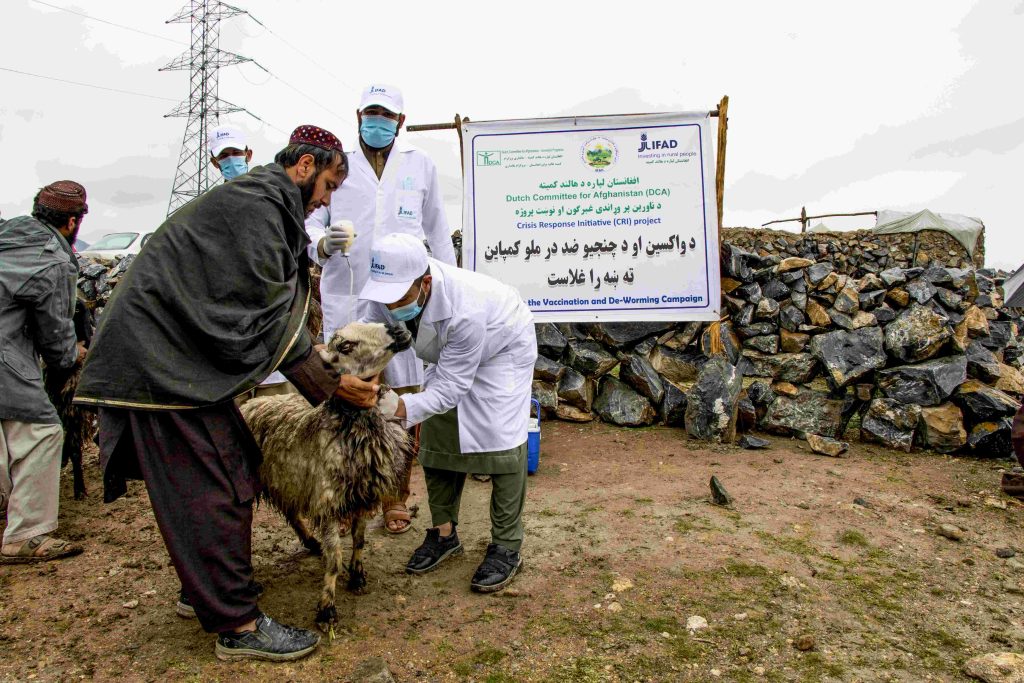
As a result of programme expansion, the number of benefiting households is expected to increase from 20,000 to 50,000.
Future Directions and Expansion
In the coming years, veterinary services, extension activities, and value chain interventions will be further scaled up across new provinces. Increased emphasis will be placed on improving the incomes of settled Kuchi women through small-scale income-generating activities, including:In the coming years, veterinary services, extension activities, and value chain interventions will be further scaled up across new provinces. Increased emphasis will be placed on improving the incomes of settled Kuchi women through small-scale income-generating activities, including:
- Lamb fattening
- Poultry production
- Milk processing
- Wool production
A new initiative enabled by additional funding will pilot genetic improvement of native sheep breeds. A dedicated research farm will be established to maintain an elite breeding flock, with improved offspring distributed to carefully selected beneficiaries.