Ensuring Quality Veterinary Pharmaceuticals Across Afghanistan
Access to reliable vaccines and medicines is critical for effective livestock health management. In Afghanistan, veterinary pharmaceuticals are commonly purchased in local bazaars due to affordability. However, many products available in these markets are counterfeit, expired, or improperly stored, reducing their effectiveness and putting livestock health at risk.
Ensuring the availability of quality veterinary vaccines and medicines has been a core priority of DCA since the start of its veterinary programme in 1988.
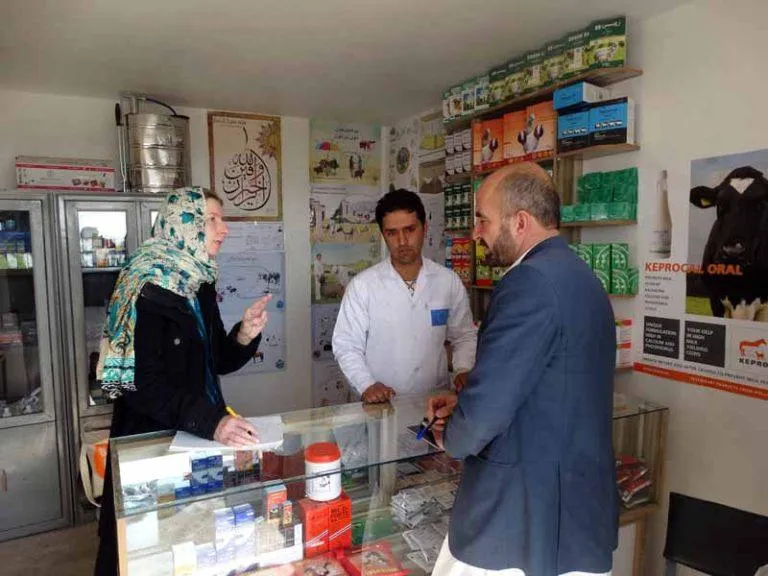
The Dutch Committee for Afghanistan (DCA) aims to maintain the quality, safety, and integrity of perishable goods, including, vaccines, medicines, and other temperature-sensitive medical supplies, despite fluctuating temperatures and logistical constraints.
To strengthen the cold chain system, DCA plans to establish one central and four regional cold chain facilities in Kabul, Herat, Balkh, Kandahar, and Nangarhar provinces. These facilities will supply 420 Veterinary Field Units (VFUs) with vaccines and medicines in accordance with cold chain standards.
The initiative also includes training veterinary staff and community workers on cold chain management, as well as implementing monitoring and maintenance protocols. These measures are intended to reduce wastage, support livestock health and productivity, and improve the effectiveness of veterinary services at the community level.
To enhance long-term sustainability, DCA gradually transitioned the import and distribution of veterinary pharmaceuticals to the private sector. As a result, VetServ was established as a commercial enterprise and officially registered in January 2011. VetServ imports high-quality veterinary vaccines, medicines, and equipment from reputable international manufacturers. The company is responsible for maintaining and expanding the cold chain infrastructure originally developed by DCA.
To guide VetServ during its development phase, DCA became a shareholder of the company. Over time, DCA’s shares have been progressively transferred to VetServ’s Executive Director. Today, VetServ operates as a successful and profitable independent enterprise. While commercially independent, VetServ remains committed to DCA’s mission of improving animal health and livestock production across Afghanistan.
DCA developed a nationwide network of 1,559 Veterinary Field Units (VFUs) that are already registered by the government. We also implement extensive extension and outreach programs and livestock products value chains to target both male as well as female farmers and pastoralists.
Kabul
Street # 5 of Syloo, House # 16 & 18, District 3, Kabul, Afghanistan