
Training & Development
Building Skilled Veterinary Services Across Afghanistan
Practical, Community-Focused Training
Over the years, DCA has become a leading organization in applied veterinary training in Afghanistan. Through structured training programs, DCA develops the capacity of Paravets and Basic Veterinary Workers (BVWs) to deliver reliable animal health and production services within their own communities.
DCA’s training programs support sustainable livestock development by combining technical expertise with strong community engagement and practical field experience.
Paravet Training Program
Paravet Course Structure
- Diagnosis and treatment of common animal diseases
- Vaccination and disease prevention
- Livestock production and animal health best practices
- Extension methods for farmer education
- Practical handling, diagnosis, and treatment of animals
Certification and Accreditation
DCA has continuously worked to formalize and standardize its training programs. On 23 March 2019, the Charikar Training Centre received official certification from the Afghan Ministry of Labour.
In 2018, the paravet training curriculum was translated into English and assessed by experts from the World Organisation for Animal Health - WOAH (formerly OIE). Following this external review, DCA initiated an internal alignment process to adapt the curriculum to OIE guidelines within Afghanistan’s national context.
Training Approach
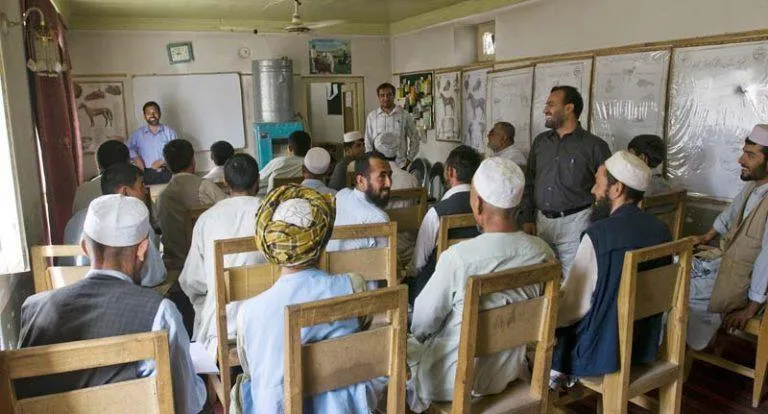
DCA’s training methodology is designed to be effective, inclusive, and practical. The Centre applies a multidisciplinary approach integrating livestock health, nutrition, disease prevention, market systems development, and community resilience.
The training approach is:
- Interactive
- Problem-oriented
- Demand-driven
In addition to direct farmer and service provider training, DCA conducts Training of Trainers (ToT) programmes to strengthen local technical capacity and ensure sustainable knowledge transfer within communities.
Courses are delivered in Dari or Pashtu by experienced Afghan trainers using modern audio-visual tools and practical field-based instruction.
Training Courses Offered
DCA delivers a wide range of veterinary training courses, including:
Paravet Course
Basic Veterinary Worker (BVW) Course
Refresher Courses
Sanitary Course
Extension Course
Veterinary Training Centres
DCA currently operates two veterinary training and support centres located in:
- Charikar (Kabul Province)
- Herat Province
Training facilities include classrooms, dormitories, laboratories, and veterinary libraries. Centres are equipped with microscopes, veterinary instruments, animal models, and audio-visual teaching aids.
The Charikar centre also operates a training farm and chicken hatchery, enabling hands-on practical learning with live animals. Accommodation and full board are provided to trainees who travel from distant provinces.