
Global Action to Prevent and Address Trafficking in Persons and Migrant Smuggling (GLO.ACT)
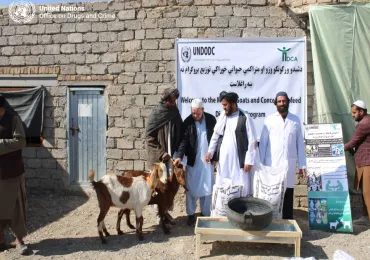
CompletedThe United Nations Office on Drugs and Crime (UNODC) continued to support the Dutch Committee for Afghanistan (DCA) to combat Trafficking in Persons (TIP) and Smuggling of Migrants (SOM), the initiative will address the root causes of these issues by focusing on economic empowerment and raising awareness in Kandahar and Helmand provinces. Through this partnership, the DCA will provide agricultural support and training to local populations, particularly female community members, to help alleviate the fundamental factors contributing to vulnerability. This includes distributing milking goats to 130 women-headed households and offering essential training in agriculture, livestock management, and the risks of TIP and SOM. The intervention aims to reach approximately 2,435 households, benefiting around 17,045 individuals, by improving livelihoods and promoting awareness of human trafficking and migrant smuggling. This will help reduce escalating food insecurity, price increases, and the growth of poppy production, and reduce vulnerability to human trafficking and migrant smuggling. Through these combined efforts, UNODC and DCA strive to foster long-term solutions to the challenges faced by vulnerable communities in Afghanistan.
Afghanistan Essential Services and Livelihoods Stabilization Program (AESLSP)
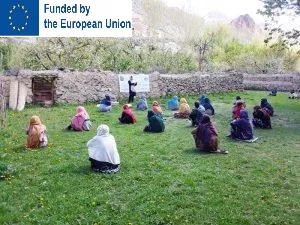
CompletedA project funded by the European Union that responds to the needs of people in the country. The project aims to address the challenges of inadequate and expensive food due to conflict, severe drought, poor harvests, and the impact of COVID-19. It operates in 16 provinces and 136 districts, focusing on livestock and market systems that were previously unreachable due to conflict. The project aims to create and expand micro, small, and medium enterprises (MSMEs), increase employment opportunities, and improve the socio-economic conditions of communities in the VFU catchment areas. It also aims to improve animal health, increase dietary diversity, and enhance community resilience. The project targets 350,000 households, including 850 private sector actors, 49,000 pastoralist households, rural youth, elderly, disabled, internally displaced persons (IDPs), returnees, and women. Its main objectives are to safeguard livelihoods and diversify food intake by promoting private-sector development and enhancing the resilience mechanisms of rural communities through livestock-focused innovations. The project also addresses gender equality and one health as cross-cutting issues. In 2023, as part of the AESLSP project, 44 stop shops were established to collect and purchase animal by-products from linked herders. Additionally, 40 new veterinary paraprofessionals were trained and equipped to deliver veterinary services, and 263 existing veterinary field units were supported across targeted provinces. The project also saw the vaccination of 1,349,601 small ruminants against diseases like Sheep and Goat Pox and Peste des Petits Ruminants, while 3,351,713 animals were vaccinated against different types of diseases. A total of 2,995,642 animals were treated and 850,948 sheep, goats, and cows were dewormed against internal and external parasites. To support the lamb fattening activity of the project, 50,000 Kg of concentrated feed was distributed to 500 households, while 30,000 pullets, along with 1,12,500 Kg balanced feed and a complete backyard poultry package, were provided to 1,000 vulnerable women-headed households in the targeted area. As part of the project's extension approach, 46,922 male and female farmers were trained on livestock-related topics. Additionally, 1,899 women farmers were educated and made aware of animal husbandry through an innovative approach of Extension for Community Healthcare Outcomes (ECHO) model which is a successful approach in the current situation of the country to reach project women beneficiaries.
Progressive Equine Welfare Improvement
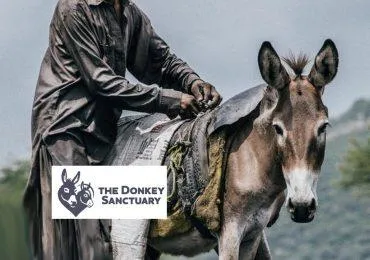
CompletedThe Dutch Committee for Afghanistan is pleased to announce that we have signed a second partnership grant with The Donkey Sanctuary (TDS-2) recently. the implementation of the project started on the 1st of July 2023 and will end on the 30th of June 2025. TDS is a UK-registered International Charity Organization founded in 1964 with a focus on the well-being of working donkeys and mules. The partnership targets working equines (donkeys and mules particularly) in the provinces of Bamyan, Takhar, and Badakhshan in Afghanistan with a total budget of $250,241. In an innovative and important project named "Progressive Equine Welfare Improvement," The Donkey Sanctuary, in collaboration with the Dutch Committee for Afghanistan, has brought about a transformative shift in the well-being of working equines across the Provinces of Bamyan, Takhar, and Badakhshan. The initiative will impact and empower 2,100 donkey owners, benefiting 3,150 donkeys and mules through enhanced knowledge and improved husbandry practices. A network fostering compassion and positive behavior towards working equines will be established, resulting in lasting improvements in animal welfare. Additionally, over 100 local policymakers, influencers, activists, and volunteers will champion the cause, reaching 24,000 people, and advocating for a more balanced relationship between donkeys and humans. The comprehensive approach of the project extends to strengthening the private animal health/welfare system, involving 46 Private Local Service Providers (PLSPs), and community groups. This collaborative network ensures the sustainability of affordable, quality animal health and welfare services, encouraging ongoing participation from PLSPs. Additionally, a focus on higher education equips 40 graduates with the knowledge and skills to manage equine cases with friendly approaches, securing a promising future for donkey welfare in the region. This multifaceted one-welfare scheme is a large step towards fostering better livelihoods for equine owners, and nurturing a harmonious relationship between donkeys, humans, and the environment.
Crisis Response Initiative Additional Facility – Afghanistan
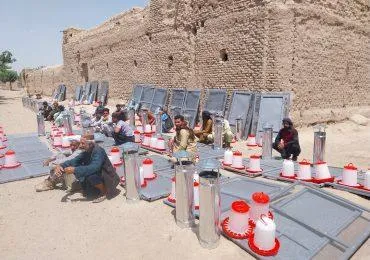
CompletedDCA received additional funding from IFAD to implement a project called the Crisis Response Initiative - Afghanistan (CRI). The CRI project is designed based on the socio-economic impacts of the long years of conflict and the pandemic, the effects of the near collapse of the financial institutions, and the ripple effects associated with the Ukraine crisis. CRI resources were used to finance the production, processing, and marketing activities of beneficiaries in 17 provinces where the target groups are predominant and whose livelihoods are in the livestock dairy industry, poultry, lamb fattening, wool, and cashmere production. The overall goals and objectives of the project are to minimize the impacts of the Ukraine war crisis ripple effects on 66,700 vulnerable settled and nomadic pastoralist households in Afghanistan protect and restore the livelihood assets and production capacity and facilitate access to market and financing.